Diablo II
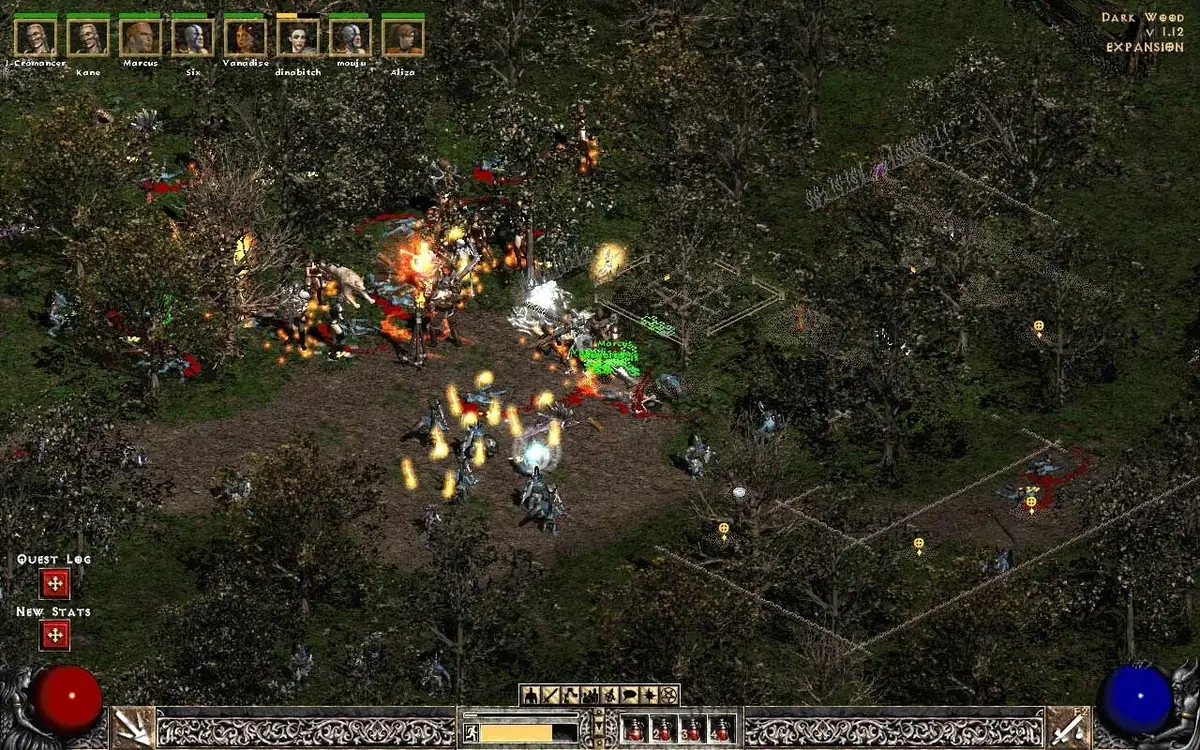
Diablo II is one of Blizzard’s finest creations and probably one of those games that shaped an entire genre.
At first glance, it’s just an action-RPG: run through dungeons, kill monsters, collect loot, level up your character. But in Diablo II, Blizzard somehow managed to create the perfect balance between simplicity and depth.
The game doesn’t explain half the things to you. It simply throws you into this dark world where somewhere out there in the shadows an ancient evil has awakened, and you are one of the few who can stand against it.
The main virtue of Diablo II is its atmosphere. Abandoned villages, cursed monasteries, endless catacombs, deserts with ancient ruins, snow-covered barbarian lands. Each act feels like a separate journey into a new world.
The plot never tries to take center stage. It serves more as a backdrop. You don’t read long dialogues or watch endless cutscenes — you just press forward because you’re genuinely curious about what comes next.
But the real magic of Diablo II was in its character progression system.
Today, many games try to build massive skill trees and thousands of build options, but often it turns into a mere illusion of choice. In Diablo II, every choice truly mattered. One misallocated skill point could alter your entire build, and a rare item could completely change your playstyle.
Every new unique item sparked genuine emotion. Not because it was just another number with slightly higher stats, but because it unlocked new possibilities. You found an item and immediately started thinking: “What if I build a character around this?”
And of course — the endless search for perfect gear. That strange loop: “just one more run, one more boss, one more chance to drop that item.” A seemingly basic mechanic, yet it hooked players for hundreds of hours.
Diablo II belonged to an era when games weren’t afraid to be challenging. There were no persistent hints, map markers, or feelings that the developer was holding your hand. You had to figure things out, experiment, and sometimes fail on your own.
Perhaps that’s why it still feels alive today. Not because of graphics or technology, but because it had a true spirit of adventure.
Many modern games have become prettier, larger, and more complex. But very few manage to recreate that feeling when you launch Diablo II late at night, step into the dark corridor of another dungeon, and realize: ahead lies a whole world full of danger, secrets, and rare loot.
Diablo II isn’t just a game about slaying monsters and looting gear. It’s one of those games that shaped an entire generation.