Dissidence
Every social system is not just a collection of people united by common interests. It is a living organism, a complex network of connections and interactions governed by its own laws. And like a biological organism, this system is capable of self-organization. It develops, adapts, fights threats, and can even get sick.
Imagine an anthill or a beehive. Each individual ant or bee seems to act independently, but in reality they follow a single set of rules, a common code. Social systems work on the exact same principle. A set of social norms, traditions, and beliefs becomes the foundation upon which interaction within and outside the society is built.
Simply put, if the majority of people:
- practice one religion
- accept one political regime
- follow similar moral principles
- lead a similar lifestyle
they transform into a single collective organism. This organism can act in harmony and with purpose, making decisions and taking action even without clear awareness in each of its members. It moves forward by the momentum of its shared consciousness.
But like any living organism, a social system faces internal threats. In a biological organism, these are viruses, parasites, defects. In society, these are criminals, inefficient citizens, or those who deliberately exploit public resources for personal gain while damaging the entire system.
Imagine an organism where one part becomes so important that it receives excessive attention at the expense of other organs. Over time, it weakens and becomes vulnerable. A biological example: drugs. The brain, satisfying its demand for pleasure, forces other organs like liver and kidneys to suffer and pay for short-term euphoria. Ultimately, the organism collapses.
In a social system it is similar: rulers who excessively exploit society's resources for personal goals exhaust it, and the system starts to fall ill. This disease manifests in economic crises, social unrest, and conflicts. Just as in a living body, this "disease" can become the cause of its demise.
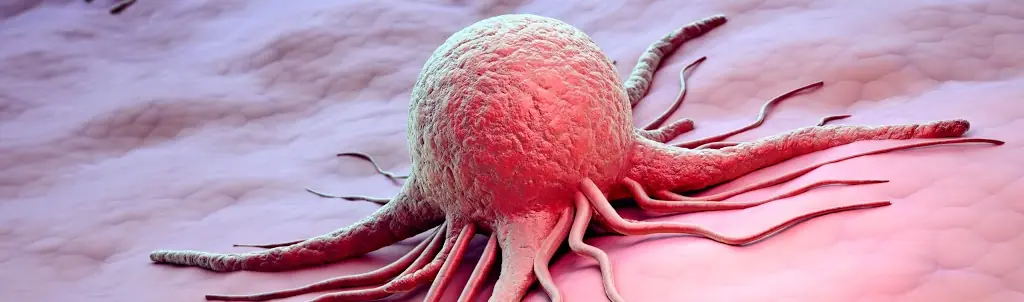
But interestingly, not all viruses are harmful. In nature, there are those that not only do not kill the host, but help it evolve, improve, and become stronger. In a social system, dissent is such a virus.
Dissent is a challenge that the system does not always want to accept. People who think differently invade society like a virus, destabilize it, and force it to question its own principles. Their ideas often seem strange, dangerous, and even destructive. But that is precisely where their strength lies. Dissent can break down old, rigid structures so that new, more refined ones can grow in their place.
If we compare this to biology, dissent is like a mutation. Not all mutations are beneficial, but they drive evolution forward. However, social evolution is more complex than biological. In society, changes do not happen purely by chance; they are guided by mind and conscious choice. In this sense, dissent is not just a mutation, but a catalyst for change that helps society adapt to the challenges of time.
So what awaits us? I believe we have every chance for a future where progress and healthy dissent lead to something greater. Intellectual evolution can become the engine driving us toward technological singularity - the moment when technology and the human mind merge together, creating something completely new and unexplored. Are we ready for this? The question remains open...