Linux - the best operating system
There are some things I didn't understand right away.
For example, that an operating system shouldn't try to be your boss.
It should be a tool.
You buy a computer for yourself, not the other way around. You buy the hardware, install the system, and you should be able to do practically anything with that machine that you are technically capable of doing.
And that's exactly why Linux is the best operating system for me.
Not because it's the prettiest.
Not because it has more buttons.
And not even because it's free.
The main reason is much simpler: Linux belongs to you.
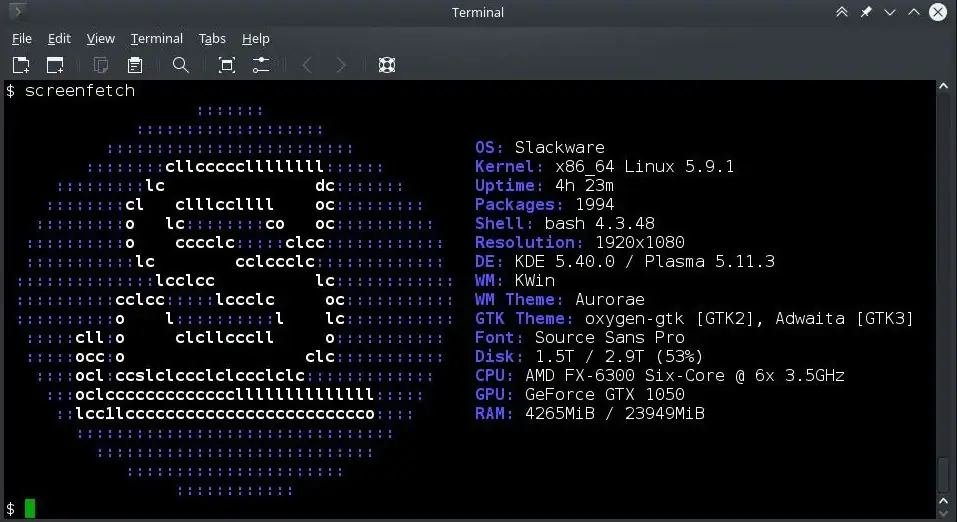
You can open a terminal and see what is actually happening inside the system. You can replace almost any component. Change the init system, filesystem, window manager, shell, networking stack, drivers, bootloader.
Don't like something? Replace it.
Want to understand how it works? Read the source code.
Need to change something? Change it.
It's a completely different philosophy.
Windows was historically built around the idea that there is a computer, there is an operating system, there is an interface, and there are rules. The user exists inside that construction.
Linux works the other way around.
Here is the computer.
Here is the kernel.
Here are the tools.
Now build whatever you need.
That's why Linux can simultaneously be an operating system for an ancient laptop, a home computer, a server, a router, a supercomputer, a phone, a television, an industrial controller, or a massive cluster.
And that's probably one of its strongest arguments.
The same philosophy works everywhere.
You can start the morning on Linux on your desktop, connect to a server over SSH in the evening, spin up a container, write a service, configure a firewall, launch a virtual machine and deploy everything to production.
You don't have to change your worldview when you change the device.
There is another thing I particularly value.
Linux doesn't force you to throw away old hardware simply because the manufacturer has decided that it's time for it to die.
An old computer can become a server.
A weak laptop can become a working machine.
A Raspberry Pi can become a network gateway, NAS, VPN, media server, or practically anything else.
Even an ancient Pentium can sometimes still be made to do useful work.
And that's a very good engineering philosophy.
A computer is not a disposable appliance.
It's a universal machine.
Linux also demonstrates how strange modern software has become.
We've gotten used to programs being enormous.
A browser consumes gigabytes of RAM.
An ordinary messenger can use more resources than games from ten years ago.
A simple application turns into an Electron program the size of half an operating system.
And then we buy even more RAM.
Linux reminds you that it wasn't always like this.
You can take a small tool that does one thing and combine it with dozens of other small tools.
You can connect them with pipes.
Automate them.
Schedule them with cron.
Create a systemd service.
Write your own shell script.
Build your own utility.
And suddenly the computer stops behaving like a household appliance and starts behaving like a machine you can control.
And the interesting thing is that Linux doesn't necessarily mean sacrificing convenience.
That's an old stereotype.
Modern Linux can easily be an ordinary desktop: browser, Steam, music, movies, office software, development, graphics, games.
Yes, sometimes you have to dig into things.
Yes, sometimes you have to deal with drivers.
Yes, sometimes some completely idiotic problem gets solved by a three-letter command you found on a forum from 2009.
But that's exactly where the important difference appears.
When something doesn't work, you have a chance to figure out why.
With a closed system, you often get:
"That's how it's designed."
With Linux, the answer is usually:
"Here's the log. Here's the configuration. Here's the process. Here's the source code. Figure it out."
And for me, the second option is much more honest.
Linux also disciplines your thinking.
Because eventually you begin to understand that an operating system isn't a desktop.
The desktop is only the surface.
Underneath are processes.
Memory.
Filesystems.
Networking.
Sockets.
Permissions.
Drivers.
The kernel.
Devices.
Services.
And once you begin to understand these things, the computer stops being magic.
You start seeing the system.
And that's much more valuable knowledge than knowing how to use a particular operating system.
Because Windows can change.
macOS can change.
Ten new interfaces can appear.
But TCP/IP, processes, filesystems, virtual memory, compilers, containers, UNIX philosophy and many other fundamental concepts aren't going anywhere.
So Linux isn't just an operating system for me.
It's more like a way of thinking about computers.
Not "user and device."
But human and universal machine.
You don't rent its capabilities.
You don't ask for permission.
You don't have to accept someone else's decisions.
You can take the system apart down to its foundations and put it back together exactly the way you want.
And that's why Linux became more than just an operating system for computers.
It became the foundation of a huge part of modern infrastructure.
Servers.
Clouds.
Containers.
Supercomputers.
Networking equipment.
Android.
Embedded systems.
Industry.
Scientific computing.
AI.
Practically the entire modern internet stands on this philosophy in one way or another.
And perhaps that's the most telling fact.
The best way to understand how good an operating system is isn't to look at how many people open a browser on it. It's to look at how many people trust it with their most important machines.
Linux passed that exam a long time ago.
The desktop is simply another place where it works remarkably well.