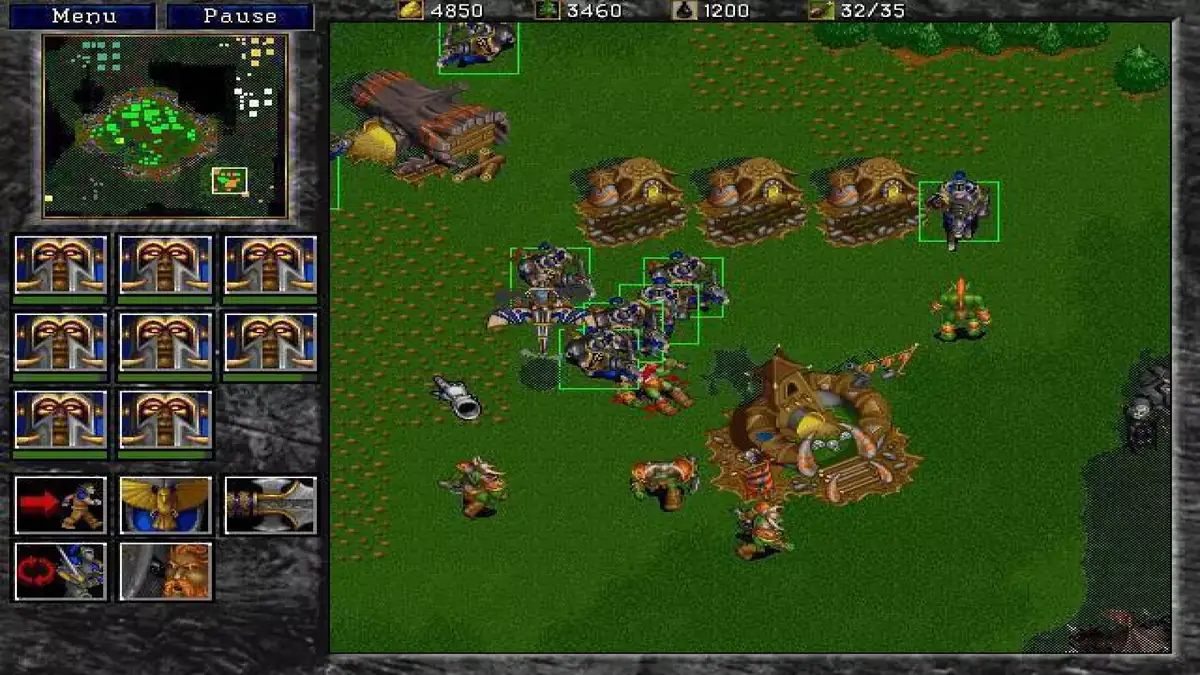
Warcraft II
Warcraft II will forever remain for me a game that proved one simple thing: technology becomes outdated, but good games don't.
I first installed it sometime in the mid-nineties. An ordinary day. An ordinary disk. An ordinary installation. But the moment the main menu music started playing, something clicked. It's difficult to explain. It was as if someone pressed an invisible button and the world around stopped existing.
Warcraft II was beautiful in the best sense of the word. Pixel art, warm and detailed. Animated water, forests that seemed alive, and fog of war that added genuine mystery. In those years, all of this looked like magic.
The gameplay was simple but incredibly deep. Two races - Humans and Orcs. Resource gathering, base building, army training, and attack. It sounds like a formula, but in practice each game turned into a small drama. You couldn't just build a lot of troops and send them forward. You had to think. Maneuver. Retreat at the right moments and attack at unexpected ones.
The music. Oh, the music. If someone were to ask me which game soundtrack influenced me the most - Warcraft II would be in the top three. It was atmospheric, slightly melancholic, sometimes anxious. It perfectly matched the spirit of the game.
Multiplayer in those years was a separate adventure. You needed to set up a network, find friends with computers, agree on settings. There was no matchmaking, no rating. Just you, your opponent, and pure strategy.
Years later I returned to Warcraft II several times. And every time I was surprised at how well it holds up. The game doesn't need modern graphics, voice acting, or cinematic cutscenes. It has something more important - soul.
Today, when I look at modern strategies with their billions of polygons and microtransactions, I often think: has anything really changed? We've gotten more polygons, more interface buttons, more "content." But has the feeling changed? That very feeling when you sit down to play and forget about time?
Warcraft II had it. And I'm afraid that many modern games never will.